
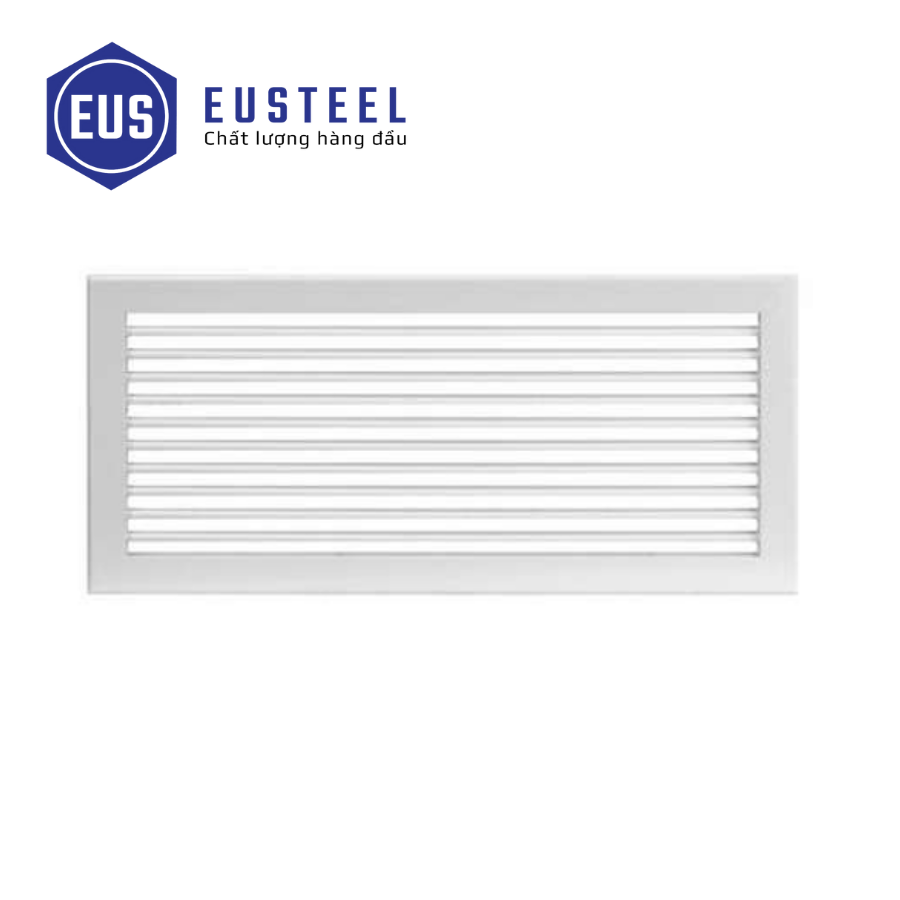
Ceiling Concealed Air Grilles in HVAC Systems
1. What is a Ceiling Concealed Air Grille?
ceiling concealed air grille is an air distribution device installed flush within the ceiling in HVAC (Heating, Ventilation, and Air Conditioning) systems. This design allows the grille to be almost “hidden,” providing high aesthetic value while optimizing usable space.
2. Role of Ceiling Concealed Air Grilles in HVAC Systems
In HVAC systems, ceiling concealed air grilles perform several important functions:
- Evenly distribute air throughout the space
- Support efficient temperature control
- Reduce noise during airflow circulation
- Enhance the overall aesthetics of the building
This type of grille is especially suitable for modern constructions such as offices, shopping centers, hotels, and high-end apartments.
3. Structure of Ceiling Concealed Air Grilles
A typical ceiling concealed grille includes the following components:
- Grille frame (aluminum or powder-coated steel)
- Blades (fixed or adjustable)
- Air filter (optional)
- Plenum box (if required)
4. Types of Ceiling Concealed Air Grilles
4.1 Diffuser (Air Diffuser)
- Multi-directional airflow distribution
- Suitable for gypsum ceilings
4.2 Ceiling Return Air Grille
- Returns indoor air to the HVAC system
- Can be integrated with an air filter
4.3 Oval Blade Ceiling Grille
- Enhanced airflow direction control
- High aesthetic appeal
5. Advantages of Ceiling Concealed Air Grilles
- Modern and elegant design
- Space-saving
- Even air distribution
- Easy cleaning and maintenance
- Effective noise reduction
6. Applications
Ceiling concealed air grilles are widely used in:
- Office buildings
- Shopping centers
- Hotels and restaurants
- Hospitals and schools
- High-end residential buildings
7. Selection Considerations
When selecting a ceiling concealed air grille, consider:
- Proper sizing to match the duct system
- Corrosion-resistant materials
- Airflow direction adjustability
- Choosing a reputable supplier
8. Conclusion
Ceiling concealed air grilles are an ideal solution for projects requiring both high aesthetics and efficient ventilation. Choosing the right type not only optimizes HVAC system performance but also enhances the quality of living and working spaces.