
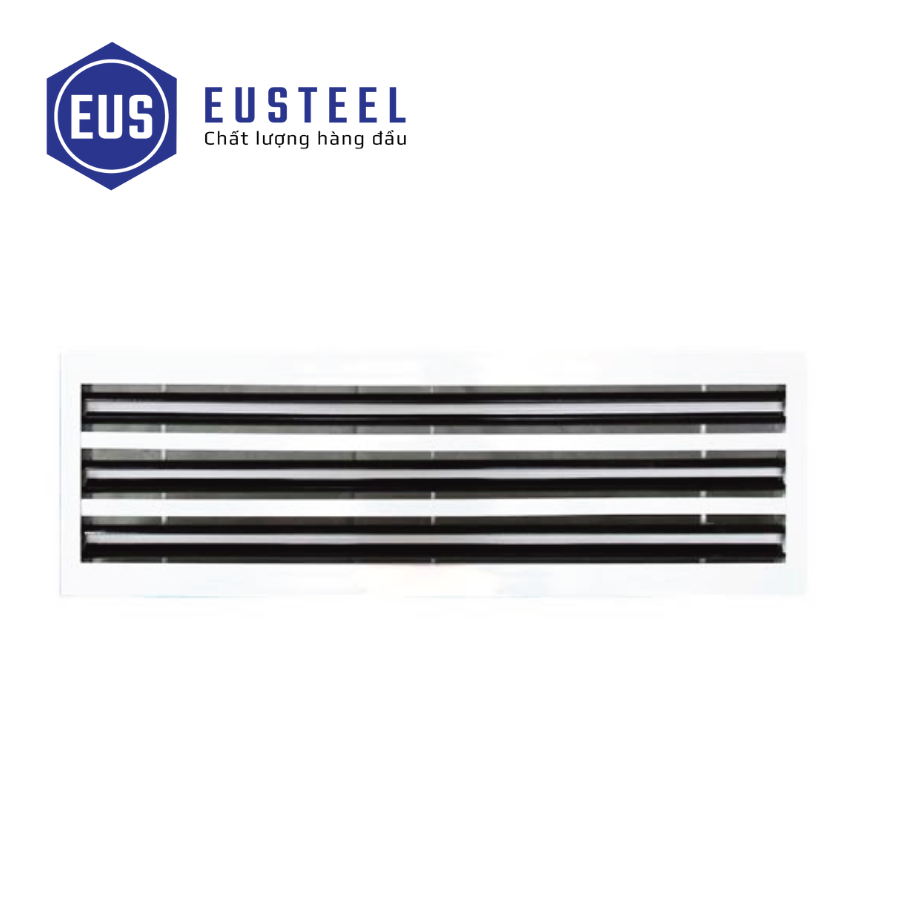
1-Layer vs 2-Layer Air Diffusers – What’s the Difference?
1. Introduction
In HVAC systems, choosing the right type of air diffuser plays a crucial role in air distribution efficiency. Among them, 1-layer and 2-layer diffusers are the most commonly used types today. So, what are the differences, and which one should you choose?
2. What is a 1-layer air diffuser?
A 1-layer air diffuser has a single set of blades (louvers), typically arranged in a fixed direction or adjustable in one direction only.
Characteristics:
- Simple structure
- Low cost
- Easy installation
- Limited airflow direction control
3. What is a 2-layer air diffuser?
A 2-layer air diffuser consists of two layers of blades stacked together, each adjustable in different directions (horizontal and vertical).
Characteristics:
- Flexible airflow direction control
- More even air distribution
- Better aesthetics
- Higher cost than 1-layer diffusers
4. Comparison between 1-layer and 2-layer diffusers
| Criteria | 1-Layer Diffuser | 2-Layer Diffuser |
|---|---|---|
| Structure | Single blade layer | Double blade layers |
| Adjustability | Limited | Flexible (2 directions) |
| Air distribution | متوسط / Moderate | High |
| Cost | Low | Higher |
| Application | Small, simple spaces | Larger, high-demand spaces |
5. When to choose a 1-layer diffuser?
- Small spaces
- No need for frequent airflow adjustment
- Budget optimization required
- Commonly used for return air
6. When to choose a 2-layer diffuser?
- Large spaces
- Need flexible airflow direction control
- Require uniform air distribution
- Commonly used for supply air
7. Conclusion
Both 1-layer and 2-layer air diffusers have their own advantages. The choice depends on usage needs, budget, and project requirements. If you need high performance and flexibility, a 2-layer diffuser is the better option. Otherwise, a 1-layer diffuser is suitable for simpler, cost-effective systems.