
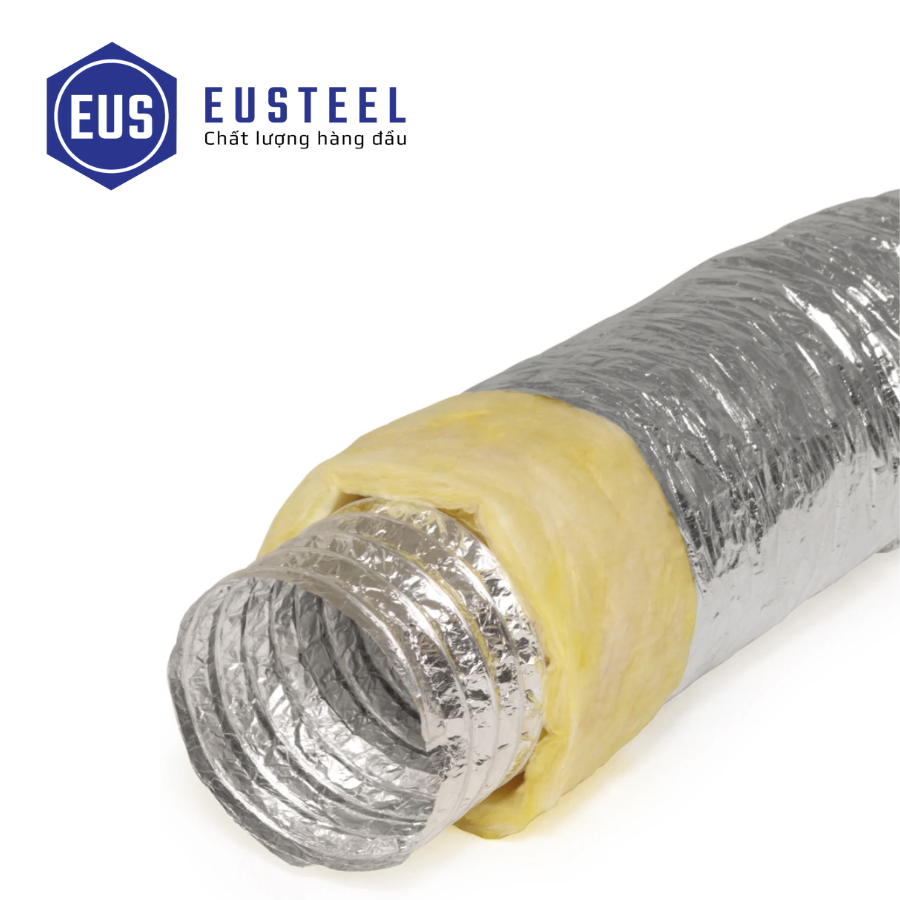
Proper Installation of Flexible Ducts – The Optimal Solution for Ventilation Systems
1. What is a flexible duct?
A flexible duct is an air distribution duct with a highly flexible structure that can be easily bent. It is commonly used in ventilation and air conditioning systems.
This product allows quick and convenient connections between equipment such as fans, air diffusers, and plenum boxes.
2. Advantages of flexible ducts
- Easy to install, saving time
- Flexible for tight and complex spaces
- Effectively reduces vibration and noise
- Lower cost compared to rigid ducts
- Suitable for various projects: residential, offices, shopping malls
3. Proper installation process
Step 1: Survey and preparation
- Determine installation location and duct length
- Select the appropriate type (insulated or non-insulated)
- Prepare materials: clamps, sealant, aluminum tape
Step 2: Duct connection
- Attach the duct end to a collar or air outlet
- Secure tightly with clamps
- Seal with specialized tape to prevent air leakage
Step 3: Fixing the duct
- Hang using straps or supports
- Maintain proper spacing (1–1.5 m)
- Avoid sagging or sharp bends
Step 4: Inspection and completion
- Check for airtightness
- Ensure smooth airflow
- Clean and finalize system acceptance
4. Important notes
- Do not overstretch the duct to avoid reducing durability
- Limit excessive bending to prevent airflow restriction
- Avoid contact with sharp objects
- Use the correct type for each environment (heat, humidity, fire resistance)
5. Applications
- Air conditioning systems
- Factory ventilation systems
- Kitchen exhaust and clean rooms
- Residential and industrial buildings
6. Conclusion
Proper installation of flexible ducts not only improves system efficiency but also extends lifespan and reduces operating costs. It is an optimal solution for modern projects requiring high flexibility.