
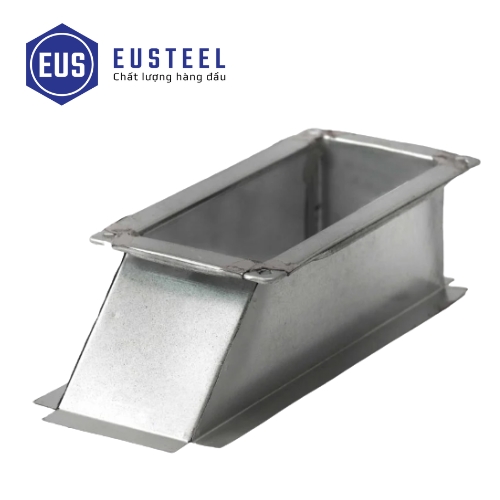
WHAT IS A DUCT BRANCH (DUCT TEE)? STRUCTURE, TYPES & APPLICATIONS
1. What is a duct branch?
A duct branch (also known as a duct tee or branch fitting) is an essential component in HVAC systems, used to split airflow from a main duct into multiple smaller branches.
It enables the ventilation system to operate flexibly while ensuring even air distribution to different areas.
2. Structure of a duct branch
Duct branches are typically made from materials such as:
- Galvanized steel
- Stainless steel
- Aluminum
Basic components include:
- Main body: connects to the main duct
- Branch outlet: directs air to another path
- Branch angle: commonly 30°, 45°, 60°, or 90°
- Connection joints: TDC/TDF flange or direct connection
3. Types of duct branches
3.1. By shape
- T-shaped branch (90°)
- Y-shaped branch (45°)
- Reducer branch (tapered branch for size reduction)
3.2. By cross-section
- Rectangular duct branch
- Round duct branch
3.3. By function
- Supply air branch
- Return air branch
- Smoke exhaust branch
4. Role in HVAC systems
- Efficient air distribution
- Reduces pressure loss when properly designed
- Optimizes installation space
- Supports system air balancing
5. Design standards
To ensure optimal performance, duct branches should follow:
- Appropriate branch angles to minimize pressure loss
- Proper curvature radius
- Balanced branch size according to airflow
- Airtight fabrication to prevent leakage
6. Applications
Widely used in:
- Central air conditioning systems
- Office buildings
- Industrial factories
- Shopping malls
- Fire protection smoke exhaust systems
7. Installation and selection notes
- Choose the correct size based on design
- Prefer tapered branches to reduce turbulence
- Install according to airflow direction
- Check airtightness after installation
8. Conclusion
Duct branches are indispensable components in HVAC systems. Proper selection and design help optimize performance, save energy, and extend system lifespan.