
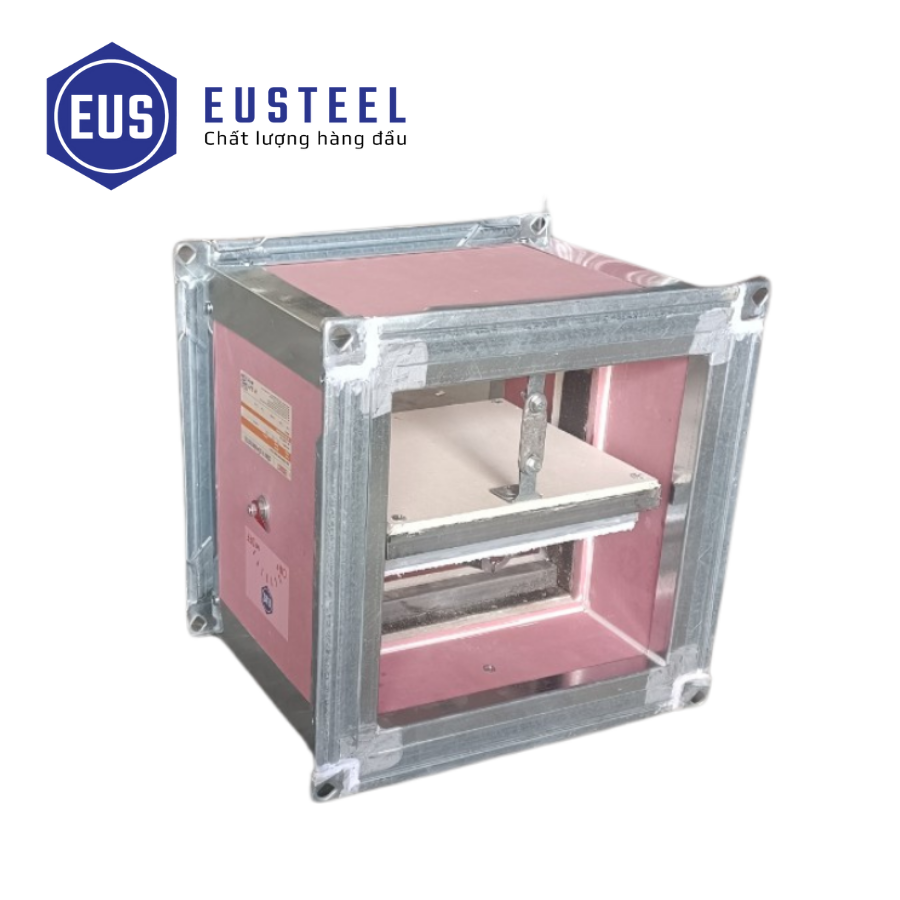
What Is a Fire Damper? Applications of Fire Dampers in Building Systems
1. What Is a Fire Damper?
A fire damper is a device installed in pipelines that carry gas, vapor, or flammable fuels, with the main function of preventing flames from spreading from one fire zone to other parts of the system.
This device helps protect pipelines, storage tanks, equipment, and human safety, especially in environments with a high risk of fire or explosion, such as:
Fuel stations
Chemical plants
Gas processing systems
Heavy industrial factories
High-risk ventilation systems
2. Basic Structure of a Fire Damper
A standard fire damper typically consists of the following main components:
Valve body: Made of stainless steel or heat-resistant alloys, offering corrosion resistance.
Flame arresting element: Designed in a honeycomb or spiral structure to cool the flame and interrupt the combustion chain reaction.
Flange or threaded connections: Easy installation into pipeline systems.
Outer protective casing: Protects against impact and pressure.
3. Working Principle of a Fire Damper
When flames or combustion pressure travel along the gas flow, the metal mesh inside the fire damper absorbs heat and rapidly cools it down.
The flame is extinguished at the damper, preventing it from spreading further downstream.
Depending on the type, the damper can operate in one direction or both directions of airflow.
4. Practical Applications of Fire Dampers
Oil & Gas – Chemical Industry
Installed at vent outlets, fuel storage tanks, and liquefied gas systems.
Prevents flames from entering from the outside or from backflow caused by leaks.
Fire Protection Systems (PCCC)
Used in combination with ventilation pipes and flammable gas pipelines in fire protection systems.
Ensures no fire spread between functional zones.
Industrial Ventilation & Exhaust Systems
Especially in environments with flammable gases, coal dust, or chemical dust, fire dampers protect exhaust fans and gas treatment equipment.
Manufacturing Plants – Factories
Applied in dust collection and exhaust gas treatment systems, especially where backfire risks exist.
5. Advantages of Fire Dampers
Prevents the spread of fire and explosions.
Operates reliably in high-temperature and high-pressure environments.
No power supply required, fully mechanical operation.
Easy maintenance, long service life, available in various sizes and materials.
6. Notes for Fire Damper Installation
Select the correct type: end-of-line, in-line, one-way, or two-way fire damper.
Install as close as possible to potential fire sources for early prevention.
Regularly maintain the flame arresting element to avoid dust buildup that reduces efficiency.
Install in the correct direction according to the arrow on the valve body for one-way types.
Conclusion
Fire dampers are essential devices in gas pipelines, ventilation systems, and oil & chemical industries. Proper installation and selecting high-quality dampers help ensure the safety of both systems and people, minimizing damage in case of fire or explosion incidents.