
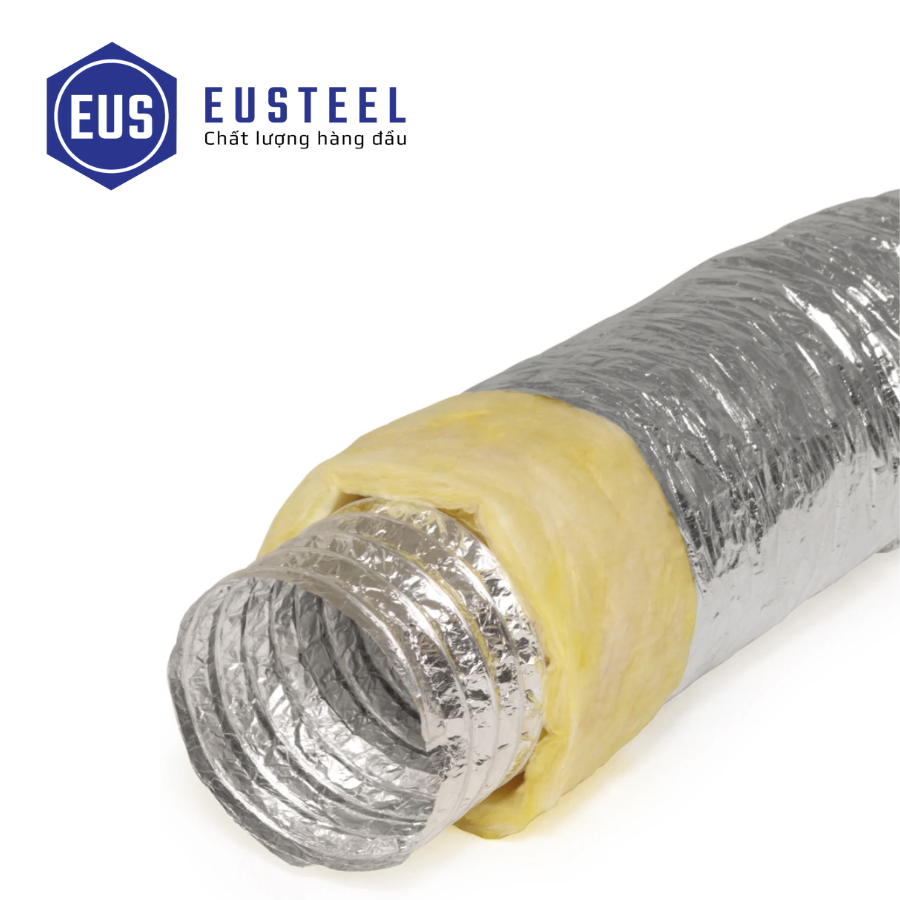
Insulated Flexible Air Duct
What Is an Insulated Flexible Air Duct? Structure, Advantages & Applications
1. What Is an Insulated Flexible Air Duct?
An insulated flexible air duct is a type of duct that includes an additional insulation layer, designed to reduce heat loss and prevent condensation in HVAC systems.
It is commonly used in air conditioning systems, especially for cold air supply ducts.
2. Structure of an Insulated Flexible Air Duct
An insulated flexible air duct typically consists of three main layers:
- Inner layer: Aluminum or PVC (airflow layer)
- Insulation layer: Glass wool or PE foam
- Outer layer: Aluminum or protective tear-resistant film
👉 The insulation layer plays a key role in temperature retention and condensation prevention.
3. Key Advantages
✔ Excellent thermal insulation, reducing heat loss
✔ Prevents condensation
✔ Reduces system noise
✔ Flexible and easy to install
✔ Energy-saving
4. Applications
- Central air conditioning systems
- Office buildings
- Shopping malls
- Hotels and hospitals
- Residential buildings
5. When Should You Use It?
You should choose insulated flexible air ducts when:
- Used for cold air duct systems
- Operating in high-humidity environments
- Energy efficiency is required
- Condensation prevention is necessary
6. Pricing & Selection Notes
Things to consider when choosing:
- Select appropriate insulation thickness
- Check the quality of the aluminum layer
- Ensure good air tightness
- Choose a reputable supplier
7. Conclusion
Insulated flexible air ducts are an optimal solution for air conditioning systems, helping to improve cooling efficiency, reduce energy consumption, and extend system lifespan.