
Flexible Air Duct Manufacturing Process (Detailed A–Z Guide)
1. What is a Flexible Air Duct?
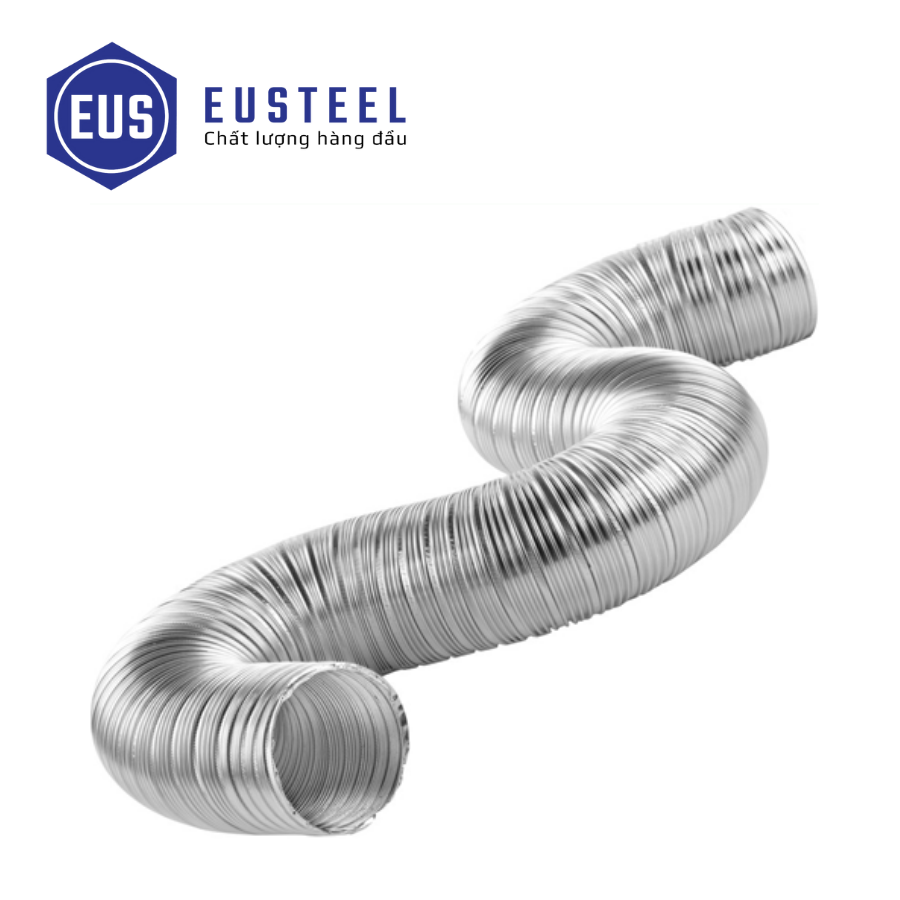
A flexible air duct is a type of air conduit with a flexible structure that is easy to bend, commonly used in HVAC systems for air supply, exhaust, or ventilation.
There are two main types of products:
- Insulated flexible air duct
- Non-insulated flexible air duct
2. Raw Materials
Before production, the following main materials need to be prepared:
- Aluminum foil or aluminum + PET
- Spring steel wire (for spiral frame)
- Glass wool / PE foam (for insulated type)
- Specialized adhesive
- Outer protective layer
👉 The quality of raw materials directly affects durability and air tightness.
3. Flexible Air Duct Manufacturing Process
🔹 Step 1: Forming the Steel Spiral Frame
- Steel wire is fed into a coiling machine
- Formed into a continuous circular spiral frame
- Ensures elasticity and shape retention
🔹 Step 2: Applying the Aluminum Layer (Airflow Layer)
- Aluminum foil is wrapped around the spiral frame
- Bonded securely using adhesive
- Creates an airtight airflow layer to prevent leakage
👉 This is the key layer determining air tightness.
🔹 Step 3: Insulation Layer Wrapping (for insulated ducts)
- Glass wool or PE foam is wrapped around the outside
- Ensures standard thickness (typically 16mm – 25mm)
- Provides thermal insulation and prevents condensation
🔹 Step 4: Outer Protective Layer
- An outer layer of aluminum or PVC is applied
- Protects against tearing and moisture
- Enhances product durability
🔹 Step 5: Shaping & Cutting
- The duct is stretched and shaped
- Cut into standard lengths (3m, 5m, 10m, etc.)
- Compressed and packed for easy transportation
🔹 Step 6: Quality Control (QC)
- Air tightness testing
- Tensile strength and elasticity testing
- Material thickness inspection
- Ensures compliance with technical standards
4. Modern Manufacturing Technologies
Today, many factories apply:
- Automatic duct forming machines
- Heat sealing technology instead of adhesive
- Continuous production lines
👉 These improve productivity and ensure consistent quality.
5. Required Technical Standards
Flexible air ducts must meet the following standards:
- High air tightness
- Heat resistance and fire resistance (if required)
- HVAC / SMACNA standards
- Environmental safety standards
6. Advantages of Modern Manufacturing Processes
✔ Increased product durability
✔ Optimal air tightness
✔ Reduced technical defects
✔ Higher production efficiency
✔ Consistent product quality
7. Conclusion
The flexible air duct manufacturing process includes multiple stages, from frame formation and airflow layer application to final finishing. Strict control at each stage ensures product quality, durability, and the performance of ventilation systems.